Russell Baze: The Man Behind 12,844 Career Wins

Good Evening!

Welcome to a new post here at zoelouisesmithx.com. Today’s post is one I have found so interesting to research and I had to share it! It is quite unbelievable and I cannot believe I hadn’t heard of it before now. It isn’t the longest post, but it definitely one of the more interesting stories I have seen!

When AP McCoy rode over 4000 winners when retiring, we all thought that was an incredible achievement – which of course it was! But would you believe me if I told you there is someone in the world who had 3 times the amount of winners that AP did? Let’s get right into the story of Russell Baze.


Russell Avery Baze was born on August 7th 1958 in Vancouver, British Columbia, Canada. His father Joe Baze is a former jockey and trainer who was competing at Exhibition Park in Vancouver at the time, so therefore Russell was given dual Canadian/American citizenship.

In 1974 at 16 years old, Russell started his career as a jockey, debuting in Walla Walla, Washington and that year he recorded his first victory at the Yakima Meadows racetrack on October 28th on board Oregon Warrior. Russell’s first big win came in 1975 when he won the Gottstein Futurity at Emerald Downs race track.

By the early 1980’s Russell was becoming a well known name within racing after winning recording some big wins across California including the 1981 California Derby. On October 14th 1989, Russell was riding Hawkster when he set the Santa Anita Park track record for 1 and 1/2 miles on turf.

In 1995, Russell was honoured with a special Eclipse Award after winning 400 or more races in a year for four consecutive years. From then on he won 400 or more races in a year 7 more times – No other jockey has accomplished this more than 3 times.

In 1995, the Isaac Murphy Award was created to be presented annually by the National Turf Writers Association to the jockey with the highest winning percentage in North America. Russell ended up winning this 13 out of 14 years – finishing second in 2004.

In 1999, Russell was inducted into the National Museum of Racing and Hall of Fame and in 2002 he was voted the winner of the George Woolf Memorial Jockey Award by his fellow jockeys.

On December 1st 2006, Russell set the world’s all-time record for the most career victories, which was previously held by Laffit Pincay Jr with 9530 wins. Russell won on board Butterfly Belle – his 9531 career victory.

On February 1st 2008, Russell rode Two Step Cat to victory in a photo finish at Golden Gate Fields to become the first North American rider to win 10,000 races. Then just 2 years later on August 14th 2010 at Sonoma County Fairgrounds in Santa Rosa, California, Russell rode Separate Forest to victory to win his 11,000 race. On July 7th 2013, Russell won on Handful of Pearls in Pleasanton, California, this being his 12,000th win.

On June 12th 2016, Russell Baze guided Wahine Warrior into second place at Golden Gate Fields and after doing so told his long-time agent and friend Ray Harris “That’s it. I’m going to retire.”

At the time of retiring, Russell Baze was the jockey with the most career victories in the world with a huge 12,844 wins, 9,600 seconds and 7,855 thirds. He rode a total of 53,578 times and earned $199,334,219 in his career.

Two years after his retirement he lost the title of the jockey with the most career victories in the world, when Brazillian Jorge Ricardo bypassed him, with 13,069 career wins as of March 15th 2021. However Russell keeps the record of the North American jockey with the most career victories.

Russell Baze won 12,844 races including some of the biggest races in America including the California Derby in 1981, El Camino Real Derby in 1984, 1998, 2005, 2006, 2007, 2009, 2010, 2011 and 2014, Oklahoma Derby in 1996, Bay Meadows Breeders’ Cup Sprint in 2002, Churchill Downs Handicap in 2006, Aristides Breeders’ Cup Stakes in 2006, Azalea Breeders’ Cup Stakes in 2008, California Oaks in 2009, San Francisco Breeders’ Cup Mile in 2010 and Berkeley Handicap in 2013 and 2015.

He also won the George Woolf Memorial Jockey Award in 2002, the Isaac Murphy Award in 1995-2003 and 2005-2007, Eclipse Special Award in 1995 as well as the United States Champion Jockey by wins in 1992, 1993, 1994, 1995, 1996, 2000, 2002, 2005, 2007 and 2008.


Maybe I’m naรฏve and I haven’t paid attention to what was happening around the world, but I can’t believe I had genuinely never heard of Russell before now. Reading his story and learning about his career has been really eye opening for me. I thoroughly enjoyed it. I hope you have all enjoyed this slightly shorter post!

I will see you all Saturday morning at 11am with a brand new post!

The History of the Flat Jockey Championship

Good Morning!

Welcome to a new post here at zoelouisesmithx.com. Before I get started I want to say sorry for not posting on Wednesday evening as I normally do, I have set out my schedule of 2 posts a week and stuck to it every week, however the past few weeks I had a lot going on so I was unable to get a post wrote up that I was happy to put out there, so I chose not to post and instead get a post up today and hopefully stick to the schedule here on out for the rest of 2021.

As many of you will know, the Flat Jockey Championship started last week, so I decided for today’s post to have a little look at the history of Championship and a look at who is up there in the betting for this years title, which looks like it could be a very good renewal! So without further ado, let’s just get into it!


The Flat Jockey Championship runs between May and October each year, with this years falling between the Guineas Festival on May 1st and the British Champions Day on October 16th. Originally the Championship was decided between the Lincoln Handicap Day and November Handicap Day, however it was in 2015 it was announced it would be reduced. So instead of the 32 weeks, it is now only around 24 weeks. In 2015, it was also announced that the Champion Jockey would receive a prize of ยฃ25,000 and the runner up would receive ยฃ10,000.

The first recognised Champion was in 1840 when Nat Flatman had 50 wins. Nat Flatman then went on to win the Championship consecutively up until 1852, with 104 being his biggest tally in 1848. It was 1853 when a new person won the Championship when John Wells had 86 winners, then winning again in 1854 with 82 winners.

In 1855 a new Champion took over when George Fordham won with 70 victories, then keeping the title all the way up to 1863, with 166 victories in 1862 being his highest winning season. In 1864 Jemmy Grimshaw won the title with 164 wins, before George Fordham won it back in 1865 with 142. In 1866 Sam Kenyon won with 123 wins, before George Fordham winning it back again in 1867 with 143 wins and keeping it in 1868 with 110 wins and in 1869 with 95 wins.

In 1870 there was the first join title when William Gray and Charlie Maidment both had 76 winners, followed up by another joint win in 1871 when George Fordham and Charlie Maidment had 86 wins.

The next mentionable name is Fred Archer who started his rein of Championship victories in 1874 when he has 147 wins, he then kept the title all the way up to 1886 when he won it with 170 wins. Throughout that time he recorded some of the biggest number of winners ever seen totalling 2609, including a 210, 218, 220, 229, 232, 241 and 246.

In 1900 the first winner from outside of Britain won the title when American born Lester Reiff won with 143 victories, followed by another American born jockey Danny Maher in 1908 with 139 victories. From 1909 to 1912 Australian jockey Frank Wootton won the title with a highest winning season of 187 in 1911. Danny Maher then won the title back in 1913 with 115 victories.

Between 1914 and 1922 Steve Donoghue won the title with a highest winning season of 143 in 1920. In 1923 Steve Donoghue jointly won the title with Charlie Elliott both with 89 wins.

Between 1925 and 1953, Gordon Richards won the title a record breaking 26 times with 1947 being a record breaking season – still to be broken – with 269 wins.

In 1960, the very famous Lester Piggott won the title for the first time with 170 wins, then winning it again in 1964 and all the way up to 1971 with his highest winning season being 1966 with 191 wins. In 1972 and 1973 Willie Carson won the title with 132 wins followed by 164.

Between 1974 and 1977 Irish born Pat Eddery won the title, with 148 wins followed by 164, 162 and 176. In 1978, Willie Carson won the title back with 182 victories, before winning it again in 1980 with 166 wins. Followed by Lester Piggott regaining the title in 1981 and 1982 with 179 and 188 wins. Before Willie Carson won the title back again in 1983 with 159 wins.

In 1992 the first South African born jockey won the title, this being Michael Roberts with 206 wins. In 1994 and 1995, Italian born Frankie Dettori won the title with 233 victories followed by 211 victories. In 1997, 1998 and 1999 Irish born Kieren Fallon won the title with 202, 204 and 200 wins. Before regaining the title back in 2001 and keeping it until 2003 with 166, 136 and 207 wins, before Frankie Dettori retained the title in 2004 with 192 wins.

In 2005, another Irish born jockey win, this time being Jamie Spencer with 163 wins, followed by Ryan Moore in 2006 with 180 wins. In 2007 we seen another joint win when Seb Sanders and Jamie Spencer both had 190 wins. In 2008 and 2009, Ryan Moore regained the title with 186 and 174 wins. In 2010 and 2011 Paul Hanagan won the title with 191 and 165 wins. Between 2012 and 2014 Irish born Richard Hughes won the title with 172, 208 and 161 wins.

In 2015, we see Brazilian born Silvestre de Sousa win the title for the first time with 132 wins. Jim Crowley won in 2016 with 148 wins, before Silvestre de Sousa won the title back in 2017 with 155 wins and keeping it in 2018 with 148 wins. For 2019 and 2020 we seen current Champion Jockey Oisin Murphy crowned with 168 victories in 2019 and 142 in 2020.


The person with the most titles is Gordon Richards who won it a massive 26 times, he also holds the record for the most wins in one season when he recorded 269 wins in 1947.

The most consecutive titles is 13, which is held by Nat Flatman who won between 1840 and 1852 and then done again by Fred Archer between 1874 and 1886.


On to this years Championship. (I have got all odds from the Sky Bet website and they were correct at time of editing on 07/05/2021.)

The favourite for this years title race is currently William Buick who is 7/4, followed very closely by Oisin Murphy at 2/1. Third up is the person currently at the top of the table, Ben Curtis with 7 wins out of 25 rides (Strike rate of 28%) who is 11/4. We then have the best couple in sport in the next two spots Tom Marquand at 5/1 and Hollie Doyle at 11/2. It then opens up with Daniel Tudhope, James Doyle, Ryan Moore and Silvestre de Sousa at 33/1 with Andrea Atzeni at 50/1. There is then Ben Robinson, David Egan, David Probert, Jim Crowley, Kevin Stott and Luke Morris all at 66/1 with Cieren Fallon and Paul Hanagan at 100/1.

So overall, it looks a pretty open race, with the top 5 all with a very good chance of winning the title, but as we all know, anything can happen in racing!


Who do you think will win the title this year? Let me know over on Twitter. I hope you enjoyed this little insight into the Flat Jockey Championship and I will see you all in my next post!

The History of the 2000 Guineas

Good Morning!

Welcome to a new post here at zoelouisesmithx.com! Ahead of today’s renewal of the 2000 Guineas I have decided to have a quick look at the history of the race including some past winners and some interesting records, facts and figures. So without further ado, lets just jump right in!


The 2000 Guineas Stakes is a Group 1 flat horse race which first took place in 1809. It is open to 3 year old thoroughbred colts and fillies, which is ran over 1 mile (1,609 metres) on the Rowley Mile at Newmarket. It is one of the Britain’s five ‘Classic’ races and currently it is the first one of the year, being ran in late April/early May each year. It is also the first leg of the Triple Crown, you can read more about that right here: https://zoelouisesmithx.com/2021/04/28/the-history-of-the-english-triple-crown/.

The first running of the 2000 Guineas Stakes took place on April 18th 1809, established by the Jockey Club under the direction of Sir Charles Bunbury, who interestingly had previously co-founded the Espom Derby. The race was named after its original prize, a guinea amounted to roughly ยฃ1.05, so 2000 guineas roughly equalled ยฃ2,100.


Now, lets have a look at some previous winners, starting with the first winner back in 1809, Wizard who was rode by Bill Clift, trained by Tom Perren and owned by Christopher Wilson. I then want to skip forward a few years to 1814, this was the first of three wins in a row for jockey Bill Arnull and trainer Dixon Boyce when Olive won, in 1815 the pair won again with Tigris, then winning again for a thirs time in 1816 with Nectar.

This repeated itself a few years later, starting in 1820 when jockey Frank Buckle, trainer Robert Robson and owner 4th Duke of Grafton won with Pindarrie, the trio then won again in 1821 with Reginald and again in 1822 with Pastille – who interestingly was the first filly to win the race.

Let’s jump forward quite a few years now to 1900 where Diamond Jubilee won the race (who also went on to win the Triple Crown) who was trained by Richard Marsh, with Herbert Jones riding for the owner the Prince of Wales at the time Edward VII who went on to be the King the following year in 1901. He then won again when he was King in 1909 just a year before his death in 1910. This time he won the race with Minoru who was rode by Herbert Jones and trained by Richard Marsh again.

The next one I want to look at is in 1942 when Big Game won for jockey Gordon Richards and trainer Fred Darling and the King at the time King George VI who is Queen Elizabeth II (the current Queen)’s father.

In here I want to quickly mention the 1956 winner Gilles de Retz who won for jockey Frank Barlow and owner Anthony Samuel. This is very interesting as the trainer was a lady called Helen Johnson Houghton who was the first female trainer to train a Classic winner, however her name does not appear in the official records, instead it is replaced by the name Charles Jerdein because at the time the Jockey Club would not allow women to hold a trainers’ license.

We then jump forward to 1968 when Lester Piggott won on Sir Ivor for Vincent O’Brien and owner Raymond Guest, he then went on to win again in 1970, this time on Nijinsky, again for Vincent O’Brien and owner Charles Engelhard. Nijinsky went on to be the last ever Triple Crown winner to date. A few years later in 1976 Frankie Dettori’s father Gianfranco Dettori won on Bolkonski for Henry Cecil and owner Carlo d’Alessio, before winning again the next year in 1977 for the same trainer and owner, this time on Wollow. 20 years later in 1996 Frankie then won the race on Mark of Esteem for Saeed bin Suroor and Godolphin.

In 1997 Michael Kinane won the race on Entrepreneur for Michael Stoute and owners Tabor / Magnier then winning again in 1998 this time on board King of Kings for Aidan O’Brien and the same owners.

The following year in 1999, Frankie Dettori would win again this time on Island Sands for Saeed bin Suroor and owners Godolphin, however this renewal of the race took place on Newmarket’s July course.

Other notable winners we have is Rock of Gibraltar winning in 2002 for jockey Johnny Murtagh, trainer Aidan O’Brien and owners Ferguson / Magnier, Pat Smullen winning the race in 2003 on board Refuse to Bend for trainer Dermot Weld and owners Moyglare Stud Farm.

We then have Footstepsinthesand winning in 2005 for jockey Kieran Fallon, trainer Aidan O’Brien and owners Tabor / Magnier with them following it up in 2006 with George Washington this time for Magnier / Tabor / Smith.

We also have Frankel who won in 2011 for jockey Tom Queally, trainer Henry Cecil and owner Khalid Abdullah, followed up by Camelot in 2012 for jockey Joseph O’Brien, trainer Aidan O’Brien and owners Smith / Magnier / Tabor. There’s also Gleneagles in 2015 for jockey Ryan Moore, trainer Aidan O’Brien and owners Smith / Magnier / Tabor. With Galileo Gold winning in 2016 for Frankie Dettori, Hugo Palmer and Al Shaqab Racing.

In 2017, 2018 and 2019 trainer Aidan O’Brien and owners Smith / Magnier / Tabor were successful, firstly with Churchill in 2017 rode by Ryan Moore, then Saxon Warrior in 2018 rode by Donnacha O’Brien followed up by Magna Grecia in 2019 also rode by Donnacha O’Brien.

The latest winner was Kameko who won the race in 2020 when it was actually ran slightly later into the year in June due to the Coronavirus pandemic. He was rode by Oisin Murphy for Andrew Balding and Qatar Racing.


Now let’s have a look at some records over the years.

Starting with the leading jockey with a massive 9 victories in this race, we have Jem Robinson. His first victory came in 1825 with Enamel, with Cadland in 1828, Riddlesworth in 1831, Clearwell in 1833, Glencoe in 1834, Ibrahim in 1835, Bay Middleton in 1836, Conyngham in 1847 and finally Flatcatcher in 1848.

In more recent times with 5 wins we have Kieren Fallon who won with King’s Best in 2000, Golan in 2001, Footstepsinthesand in 2005, George Washington in 2006 and Night Of Thunder in 2014.

Let’s now have a look at the leading trainer, the name I think all racing fans know very very well within the flat racing world and that is of course Aidan O’Brien who has a huge 10 wins in this race. King of Kings in 1998 starting his run of winners, followed up by Rock of Gibraltar in 2002, Footstepsinthesand in 2005, George Washington in 2006, Henrythenavigator in 2008, Camelot in 2012, Gleneagles in 2015, Churchill in 2017, Saxon Warrior in 2018 and finally Magna Grecia in 2019.

So now, the leading owner, (this includes part ownership) and that goes to an 11 time winner Sue Magnier who has won with Entrepreneur in 1997, King of Kings in 1998, Rock of Gibraltar in 2002, Footstepsinthesand in 2005, George Washington in 2006, Henrythenavigator in 2008, Camelot in 2012, Gleneagles in 2015, Churchill in 2017, Saxon Warrior in 2018 and finally Magna Grecia in 2019.


Now onto some interesting facts to note:

The fastest winning time was 1 minute 34.72 seconds achieved by the latest winner Kameko in 2020.

The widest winning margin (since 1900) is Tudor Minstrel in 1947 who won by 8 lengths.

The biggest priced winner was Rockavon in 1961 at 66/1.

The shortest priced winner was St Frusquin in 1896 at 12/100

The biggest field was in 1930 when 28 horses ran.

The smallest field was in 1829 and 1830 when each time only 2 horses ran.

—–

So there we have it, some interesting facts, figures and records in the race. Today’s renewal should be exciting as it always is and I, for one, am quite looking forward to it. I hope you enjoyed this post and I will hopefully see you all tomorrow for an extra post where I look at the history of the 1000 Guineas ahead of tomorrow’s renewal!

Thank you for reading!

The History of the English Triple Crown

Good Evening!

Welcome to a new post here at zoelouisesmithx.com, today’s post is all about the history of the English Triple Crown which will soon be up on us. Let’s jump right into it!


The English Triple Crown is a three race competition which consists of the 2000 Guineas Stakes (1 mile), The Epsom Derby (1 & 1/2 miles) and the St Leger Stakes (1 mile, 6 furlongs & 127 yards.)

The term originated in 1853, before the American version, when West Australian won all three races in the same season. Since then, only 15 horses have completed the English Triple Crown, so let’s have a little look through the years!

In 1862, The Marquis came close when winning the 1st and 3rd legs, the 2000 Guineas and St Leger Stakes. The next year in 1863, Macaroni then came close when winning the first two legs, the 2000 Guineas and the Epsom Derby. The following year in 1864, Blair Athol won the 2nd and 3rd legs, the Epsom Derby and the St Leger Stakes. But it was in 1865 when the next successful Triple Crown winner would emerge, that being Gladiateur who successfully won all 3 races, followed swiftly in 1866 by Lord Lyon who also won all 3.

Ten years later in 1876, we seen Petrarch win the 1st and 3rd legs, the 2000 Guineas and St Leger Stakes, the following year in 1877, Silvio won the 2nd and 3rd legs, the Epsom Derby and St Leger Stakes. It was then 1881 until another horse came close when Iroquois won legs 2 and 3, the Epsom Derby and St Leger Stakes. The following year in 1882, Shotover won the 2000 Guineas and the Epsom Derby but could not complete the Triple Crown. In 1885 Melton won the Epsom Derby and the St Leger Stakes but it was the following year of 1886 when we would see a new Triple Crown winner when Ormonde won the three big races.

In 1889, another horse called Donovan won 2 of the 3 races, those being leg 2 – The Epsom Derby and leg 3 – the St Leger Stakes. However it would be 1891 when another horse became a Triple Crown winner and that horse would be a horse called Common who successfully won all 3 races, followed very quickly by Isinglass in 1893 who also managed to win all three races.

Ladas would be the next horse to come close when winning the 2000 Guineas and the Epsom Derby in 1894. With Sir Visto in 1895 and Persimmon in 1896 both winning the Epsom Derby and St Leger Stakes. The following year in 1897, Galtee More became the 7th horse to complete the Triple Crown, followed very quickly by an 8th winner in Flying Fox in 1899, and a 9th being Diamond Jubilee in 1900.

In 1902, Sceptre won the 1st leg – the 2000 Guineas and the 3rd leg – the St Leger Stakes, but the following year in 1903 we would see the 10th Triple Crown winner crowned when Rock Sand completed the treble. In 1904, St Amant won the first two legs, the 2000 Guineas and the Epsom Derby however not the third, followed by Minoru in 1909 and Sunstar in 1911 who both also won legs 1 and 2 but not the third.

We then seen the 11th, 12th and 13th Triple Crown winners come very quickly, with Pommern in 1915, Gay Crusader in 1917 and Gainsborough in 1918.

In 1925, Manna then won the 2000 Guineas and Epsom Derby but not the St Leger Stakes, followed by Coronach in 1926 and Trigo in 1929 who both won the Epsom Derby and St Leger Stakes. In 1931, Cameronian won the 2000 Guineas and Epsom Derby, with Hyperion in 1933 and Windsor Lad in 1934 both winning the Epsom Derby and St Leger Stakes. The following year in 1935, the 14th Triple Crown winner was crowned when Bahram completed the treble successfully.

In 1939, potentially another horse could have won the Triple Crown when Blue Peter won the 2000 Guineas and the Epsom Derby, however the St Leger Stakes was cancelled due to World War II beginning, so I guess we’ll never know if he could have gone on to be in the history books.

It would then be 1949 before another horse came close when Nimbus won the first two legs, however could not complete the treble. This was followed by Tulyar in 1952 and Never Say Die in 1954 who both won leg 2 and leg 3. In 1957, Crepello then also won the first two legs, but not the third. 3 years later in 1960, St. Paddy then won legs 2 and 3. In 1968, Sir Ivor came close when winning the first two races but not the third. But it would be 1970 when the 15th and final Triple Crown winner was crowned and that was, of course, Nijinsky.

Since the final winning being crowned in 1970, there has been Reference Point who won legs 2 and 3 in 1987, Nashwan who won legs 1 and 2 in 1989, Sea the Stars who won legs 1 and 2 in 2009 and Camelot who also won legs 1 and 2 in 2012.

So, to sum that up, Nijinsky is the only horse to win the Triple Crown post World War II and one of the main reasons for this is the fact that most owners do not attempt to run their horses in the St Leger Stakes as the race is longer and it may diminish the horses stud value in the future. Interestingly enough, no horses that have won the first two races between 1987 and 2012, those being Nashwan, Sea the Stars and Camelot were actually entered into the St Leger Stakes.


So the real question is… Will there ever be another Triple Crown winner again? From my research, I think it would take a very talented horse but also a gutsy owner and trainer for a horse to win all three races again, but never say never. In racing, we all know that anything is possible.

I really enjoy researching the history of these big races and from my viewing figures my readers enjoy them too, so I hope you all enjoyed this one and I will see you all in my next post on Saturday at 11am!

The History of the Scottish Grand National

Good Morning!

Welcome to an additional 3rd post of the week here at zoelouisesmithx.com. If I’m doing an extra post then this means something big is happening of course, so today I am looking into today’s Scottish Grand National where I will include the history, some facts, figures and trends, essentially as much as I can possibly research ready for the big race. So let’s just jump into it!


The Scottish Grand National is a Grade 3 National Hunt Steeplechase which is open to horses aged 5 years or older and first took place in 1867. The race is held at Ayr Racecourse over a distance of 3 miles, 7 furlongs and 176 yards (6397 metres) and 27 fences are jumped.

Initially a race known as the West of Scotland Grand National was run in 1858, which consisted of 32 jumps which were mainly stone walls and was ran at a course near Houston, Renfrewshire, however from 1858 to 1866 the races were not classed as the Scottish Grand National and therefore the winners are not classed as Scottish Grand National winners. It was in 1867 that the Free Kirk leader in Houston objected to the race so it was moved to Bogside Racecourse near Irvine. The race was initially around 3 miles and then 13 years after the initial race, in 1880, the race was officially changed to its known title of the Scottish Grand National and was extended to 3 and 7/8 miles.

In 1965 Bogside Racecourse closed so therefore in 1966, the Scottish Grand National was transferred to its new home at Ayr Racecourse and at this point, the race was extended to the 3 miles, 7 furlongs and 176 yards that it is now.


Now looking at some winners in the race, the first winner in 1867 was called The Elk and was owned by the Duke of Hamilton. The first winner after the race being extended in 1880 was Peacock and the first winner when the race moved to Ayr in 1966 was African Pistol.

Some early winners include Couvrefeu II who won in 1911, 1912 and 1913. Southern Hero who won in 1934, 1936 and 1939. And finally Queen’s Taste in 1953, 1954 and 1956.

Some other notable winners to mention was Red Rum who won in 1974 for Brian Fletcher and Donald ‘Ginger” McCain and to this day is the only horse to win the English Grand National and Scottish Grand National in the same year. Barona who won the race in both 1975 and 1976 for Paul Kelleway and Roddy Armytage. It was then 1984 and 1985 when another horse won twice in 2 years and that was Androma for Mark Dwyer and Jim Fitzgerald.

In 1992 Peter Scudamore won on Captain Dibble for Nigel Twiston-Davies who won it again as a trainer 2 years later in 1994 when Earth Summit won for jockey David Bridgwater. Another notable horse to mention was the 1995 winner Willsford who was 12 years old for jockey Rodney Farrant and trainer Jenny Pitman. In 1997 the Champion Jockey AP McCoy won on Belmont King for Paul Nicholls.

Moving into the 21st Century there were winners such as Take Control for Ruby Walsh and Martin Pipe in 2002, Hello Bud for Paddy Brennan and Nigel Twiston-Davies in 2009, Beshabar for Richard Johnson and Tim Vaughan in 2011.

The next I want to mention is duel winner Vicente who won in 2016 and 2017 for Sam Twiston-Davies and Paul Nicholls. In 2018 we had Joe Farrell for Adam Wedge and Rebecca Curtis and in 2019 Takingrisks for Sean Quinlan and Nicky Richards with no race in 2020.


Some facts, figures and records now. Let’s start with the most successful horses in the race. Three horses have won the race 3 times and those are:

Couvrefeu II – 1911, 1912, 1913
Southern Hero – 1934, 1936, 1939
Queen’s Taste – 1953, 1954, 1956

So who are the leading jockey’s? The all time leading jockey is Charlie Cunningham who won 4 times: Bellman (1881), Wild Meadow (1885), Orcadian (1887), Deloraine (1889). Then the leading jockey since the race being at it’s current home at Ayr is Mark Dwyer who has won 3 times: Androma (1984, 1985), Moorcroft Boy (1996).

We have a couple of leading trainers, these are all time both with 5 wins

Neville Crump – Wot No Sun (1949), Merryman II (1959), Arcturus (1968), Salkeld (1980), Canton (1983)
Ken Oliver – Pappageno’s Cottage (1963), The Spaniard (1970), Young Ash Leaf (1971), Fighting Fit (1979), Cockle Strand (1982)

And since being at Ayr we have Ken Oliver with 4 of his 5 victories being at Ayr: The Spaniard (1970), Young Ash Leaf (1971), Fighting Fit (1979), Cockle Strand (1982)


Now let’s have a look at some winning trends. I have looked at the last 20 winners of the race since 2000 and researched some very interesting trends, so therefore I apologise if anything is incorrect, but I have done all of the research myself using multiple sources so I hope you all find them as interesting as I do.

3/20 have been 7 years old
6/20 have been 8 years old
4/20 have been 9 years old
4/20 have been 10 years old
3/20 have been 11 years old

10/20 have carried less than 10-6
8/20 have carried between 10-6 and 11-6
2/20 have carried more than 11-6

7/20 won last time out before the Scottish Grand National
6/20 finished 2nd or 3rd last time out before the Scottish Grand National
6/20 finished outside the top 3 last time out before the Scottish Grand National
1/20 fell last time out before the Scottish Grand National (This was 2017 winner Vicente who fell in the English Grand National)

5/20 last raced within 20 days before the Scottish Grand National
5/20 last raced between 20 and 30 days before the Scottish Grand National
3/20 last raced between 31 and 40 days before the Scottish Grand National
4/20 last raced between 41 and 50 days before the Scottish Grand National
3/20 last raced over 50 days before the Scottish Grand National (The longest being 2014 winner Al Co who’s last race came 104 days before with the Scottish Grand National also being his first race for a new trainer)

2/20 were favourite or joint favourite

5/20 were priced at less than 10/1
7/20 were priced between 10/1 and 18/1
8/20 were priced at 20/1 or higher (Including 2 x 20/1, 2 x 25/1, 2 x 33/1, 1 x 40/1 and 1 x 66/1)


So there we have it, plenty of facts, figures and trends that may help you pick your winner this afternoon. Good luck with whatever horse you choose to bet on and enjoy today’s racing!

Thank you so much for reading and I will see you all Wednesday evening at 6pm for a brand new post!

Harry Skelton vs Brian Hughes

Good Morning!

Welcome to another post here at zoelouisesmithx.com. Today’s post is a quick look back at one of the most exciting Champion Jockey season’s we have had in a very long time, so with just one week to go, I wanted to briefly have a look at the season so far.

The Jumps Jockey Championship started on July 1st 2020 and ends next Saturday on April 24th 2021 and right now it’s probably the closest it’s been in my lifetime with Harry Skelton and Brian Hughes fighting it out neck and neck for the last few weeks and it’s been a pretty exciting situation to watch, I have no idea who will win but it’s been great for racing fans to see it so close for a change.

I won’t go through every single win that both Harry and Brian have had this season, I think I’d be here all year, so I have had a look at some of the bigger wins they have both had and I think we should just jump right in.

So, first up I’m going to start with Harry Skelton and the bet365 Hurdle Grade 2 (Registered As The West Yorkshire Hurdle) at Wetherby on October 31st 2020 where Harry won on Roksana as the 13/8 favourite by 8 and 1/2 lengths for brother Dan Skelton.

Two weeks later on November 14th 2020 Harry won the Karndean Designflorring Mares’ Standard Open National Hunt Flat Race (Listed Race) (GBB Race) on Elle Est Belle (16/5) at Cheltenham for brother Dan Skelton. The race was (potentially controversially) declared a deadheat with joint winner Ishkhara Lady (11/2) for Sean Bowen and Harry Fry.

One week later on November 21st 2020 Brian Hughes won the Betfair Supports Safer Gambling Week Handicap Chase (Class 2) at Haydock on Snow Leopardess (9/2J) for Charlie Longsdon by 1/2 length to Commodore.

Eight days later on November 29th 2020, Brian then won the Houghton Mares’ Chase (Listed Race) (GBB Race) at Carlisle on My Old Gold (4/1) for Nicky Richards, winning by 1 and 1/2 lengths to Chilli Filli.

We then move forward to December 5th where we had a rather successful day for both jockeys with Brian Hughes heading to Aintree and Harry Skelton heading to Sandown. First of we had Harry Skelton win the 1:50, the Planteur At Chapel Stud Henry VIII Novices’ Chase (Grade 1) (GBB Race) on Allmankind (2/1F) beating Hitman (11/4) by 2 and 1/2 lengths for brother Dan Skelton. He then won the 2:25 – Betfair Tingle Creek Chase (Grade 1) (GBB Race) on Politologue (11/8F) for Paul Nicholls beating stable mate Greaneteen (5/2) for Harry Cobden by 7 lengths.

15 minutes later at 2:40, Brian Hughes then wins the William Hill Many Clouds Chase (Grade 2) with Lake View Lad (16/1) for Nick Alexander, beating Santini (13/8F) by 1 length.

Moving forward a couple of weeks and on December 18th, Harry Skelton wins the Sky Bet Supreme Trial Novices’ Hurdle (Grade 2) at Ascot on My Drogo (9/1) beating 2/1 favourite Llandinabo Lad by 2 and 3/4 lengths, again for Dan Skelton.

The following day on December 19th, Brian Hughes then wins the Betfair Tommy Whittle Handicap Chase (Class 2) on Sam’s Adventure (14/1) for Brian Ellison, beating Sojourn the 11/4 joint favourite by 4 lengths.

One week later on boxing day 2020, Harry then wins the Ladbrokes Kauto Star Novices’ Chase (Grade 1) at Kempton on Shan Blue (7/4F) for Dan Skelton, beating The Big Breakaway (16/5). Following that up with another win at Kempton the following day December 27th when he won the Ladbrokes Desert Orchid Chase (Grade 2) on Nube Negra (20/1) for Dan Skelton, beating Evens favourite Altior by 3 and 1/2 lengths.

Moving into 2021, we have Harry Skelton kicking us off on January 23rd when he won the Matchbook Betting Podcast Mares’ Hurdle (Grade 2) at Ascot on Roksana (8/15F) for Dan Skelton, beating Magic Of Light (9/2) by 8 lengths.

On February 7th Brian Hughes headed to Musselburgh where he won the bet365 Scottish Triumph Hurdle (Listed Race) on Fiveandtwenty (6/4F) for Donald McCain beating Historic Heart (5/1) by 4 lengths.

Harry Skelton then had a busy two days when he won the Bet At racingtv.com Novices’ Hurdle (Listed Race) at Exeter on Wilde About Oscar (16/5) for Dan Skelton on the 14th of February beating Evens favourite The Glancing Queen by 7 and 1/2 lengths. Followed up by 2 quick wins at Warwick the following day on February 15th when winning the Agetur UK Kingmaker Novices’ Chase (Grade 2) on Allmankind (4/7F) for Dan Skelton, beating eventual Cheltenham Festival winner Sky Pirate (3/1) by 14 lengths. Followed by the next race on the card, the St Marys Land Warwick Mares’ Hurdle (Listed Race) on Molly Ollys Wishes (7/2) for Dan Skelton, actually beating Brian Hughes in second place on the Evens favourite Paul’s Saga by 15 lengths.

On February 20th 2021, Harry then won the “My Oddsboost” on Betfair Swinley Chase (Listed Race) at Ascot on Captain Chaos (10/1) for Dan Skelton, by a head to Regal Encore (12/1).

The following day, Brian Hughes headed to Market Rasen where he won the Ballymore Sidney Banks Novices’ Hurdle (Listed Race) on Minella Drama (13/8F) for Donald McCain, beating Stoner’s Choice (9/4) by 3 lengths.

Swiftly moving into March, on the 6th Harry Skelton won the bet365 Premier Novices’ Hurdle (Grade 2) at Kelso on My Drogo (2/1F) for Dan Skelton beating Do Your Job (10/1) by 9 and 1/2 lengths. One week later on the 13th of March, Harry then won the Paddy Power Imperial Cup Handicap Hurdle (Grade 3) at Sandown on Langer Dan (5/1) for Dan Skelton beating Miss Heritage (8/1) by 4 and 1/2 lengths.

We then move into April and the final month for both jockey’s to get the wins on the board ready to be crowned Champion Jockey. We start off on April 8th when Harry Skelton won the SSS Super Alloys Manifesto Novices’ Chase (Grade 1) at Aintree on Protektorat (17/2) for Dan Skelton, beating The Shunter (7/2) by 3 and 3/4 lengths. Followed up on the 10th of April when winning the Betway Mersey Novices’ Hurdle (Grade 1) on 5/4 favourite My Drogo, again beating Brian Hughes on the second placed Minella Drama (12/1) by 9 and 1/2 lengths.

Also want to include here that Harry Skelton finished 6th in the Grand National on Blaklion (50/1) on the 10th of April for brother Dan Skelton, making them the first British trained horse to cross the line.

We then head into the April meeting at Cheltenham where both jockey’s had a pretty successful time. On April 14th, Harry Skelton won the 1:30 Join Racing TV Now Novices’ Hurdle (Class 2) on 4/6 favourite Faivoir for Dan Skelton, winning by 2 and 3/4 lengths to Witness Protection (8/1). Harry then won the 2:40 Kingston Stud Handicap Hurdle (Class 2) on 7/2 joint favourite Proschema for Dan Skelton, winning by 6 and 1/2 length to Winds of Fire (9/1). Moving on to the 4:25 Weatherite Handicap Chase (Class 2) where Brian Hughes pulled one back when winning on Domaine De L’Isle (6/1) for Sean Curran, beating Coo Star Sivola (5/1) by 1 and 1/2 lengths.

The following day on April 15th, Brian Hughes claws another one back when winning the Citipost Mares’ Handicap Hurdle (Listed Race) on Bannixtown Glory (9/1) for Donald McCain, beating Harry Skelton on the 5/2 favourite Eglantine Du Seuil by 1 and 3/4 lengths.

Yesterday both Brian and Harry headed to Ayr for the Scottish Grand National meeting and in doing so, Harry Skelton has now pulled ahead after winning the first race on Stepney Causeway (4/9F) for Dan Skelton, beating Brian on Mrs Hyde (15/8) by 19 lengths and also the last race on I’d Better Go Now (11/2J), again for Dan Skelton, beating Manetti (33/1) by 3/4 of a length.

So, all in all we start today with Harry Skelton on 143 and Brian Hughes on 139 with just 8 days of racing left. It’s still very very close and either could win so I am very excited to see how this final week goes. Both have been going for it and picking up as many spare rides as possible so I think this last week could be very interesting.


Personally, I would love to see Harry Skelton win the Jockey Championship for a couple of reasons. He is based very close to where I live, so it would be nice to see a local jockey win, but also because the majority of Harry’s rides have came from his brother Dan Skelton and as far as I’m aware (correct me if I’m wrong), the last time a jockey won the Jockey Championship with the majority of their rides coming from one stable was when AP McCoy won it whilst riding for Martin Pipe, so for me that is a huge achievement. I won’t take anything away from Brian Hughes, but I feel like he has the opportunity to ride a lot more horses for a lot more trainers and personally, I think if Harry Skelton had the opportunity to ride as many horses as Brian Hughes has then he would be a mile ahead in the title race. The fact that Brian has had over 200 more rides than Harry and Harry has still been fighting it out at the top shows just how incredible Harry’s season has been. Overall, it’s been a huge season for the Skelton team and I think that Harry winning the Champion Jockey title would just be the best way to end it. Again, I want to reiterate I am not taking anything away from Brian Hughes and if he wins it then he deserves it, but for me, I would just love to see Harry Skelton do it.

I have found looking back over this season actually really interesting and I hope everyone else has found it interesting to read too. If there are any similar posts like this you would like to see me do for particular jockeys, trainers, owners, horses etc then please do let me know over on Twitter (https://twitter.com/zoelouisesmithx) and I will try my best to have a look into it because I find researching these posts so interesting and from my viewing figures for similar posts like this, they have seemed to be pretty popular.

I actually have an extra post coming tomorrow morning at 11am where I look into the history of the Scottish Grand National ahead of tomorrow afternoons renewal, including some winning trends, facts and figures which may help you pick your winner, so keep your eyes out for that one! See you then!

Rachael Blackmore – The Best Female Jockey We Have Ever Seen?

Good Evening!

Welcome to a new post here on zoelouisesmithx.com. After the incredible few days racing at Aintree last week, I thought it was only fitting this evening that I looked into the first female jockey to ever win the Grand National and that is of course Rachael Blackmore. I was lucky enough to interview Rachael at the beginning of the year which you can read in full right here: https://zoelouisesmithx.com/2021/01/23/an-interview-with-rachael-blackmore/. We spoke about all things racing including interestingly how her partnership with Grand National winning trainer Henry De Bromhead materialised. However, today’s post is all about Rachael’s career this far. She has started breaking records within the sport and proving that females can compete in an even field with the men and personally, I think that is so important for young girls who may want to get into the sport. So without further ado, shall we just jump straight in? Before we start, this post was written on April 10th and 11th 2021 therefore does NOT include Rachaelโ€™s rides at Fairyhouse on the 13th of April 2021.


Rachael Blackmore was born on the 11th of July 1989 in Killenaule, County Tipperary in Ireland, making her currently 31 years old. Rachael’s first ride came on the 28th of January 2010 where she competed in the DBS/EBF Mares’ Standard Open National Hunt Flat Race (Commonly known as a bumper) at Ffos Las on board Pilsudski Rose for trainer A J Kennedy where unfortunately they only managed an 11th place at 66/1. It was actually a whole 13 months before Rachael managed to find her first winner, which came on the 10th of February 2011 when she rode Stowaway Pearl to victory at Thurles at 10/1 for trainer John Hanlon in the Tipperary Lady Riders Handicap Hurdle as an amateur jockey.

Just over 4 years later in March 2015, Rachael turned professional and on September 3rd of the same year, she rode her first winner as a professional when she won on the 11/2 shot Most Honourable in the Woodrooff Handicap Hurdle at Clonmel, again for John Hanlon.

Just 2 years later on March 12 2017, Rachael won her first ‘big’ race when she won the Download The Ladbrokes Exchange App Leinster National Handicap Chase (Grade A) at Naas on Abolitionist, a 12/1 shot for Ellmarie Holden. That same year, Rachael became the first woman to win the Conditional Riders’ Title for the 2016/2017 season.

A fact that may surprise some is that Rachael actually also rode on the flat, with her first winner coming on May 16th 2017 at Killarney in the July Racing Festival 17th-20th 2017 Race for Denise O’Shea on Supreme Vinnie at 14/1.

One month later, on June 21st 2017 Rachael rode her 60th racecourse winner at Wexford in the Oulart Maiden Hurdle, where she rode out her claim. She ended up winning on the 4/1 shot Sweet Home Chicago for trainer Colin Bowe by a massive 16 lengths.

We swiftly move into 2018 and on July 22nd at Tipperary, Rachael rode her first ever treble when she partnered up with Henry De Bromhead to win on Theatre Dreams (10/1) by 8 and 1/2 lengths, Monbeg Chit Chat (9/4F) by 2 and 3/4 lengths and Classic Theatre (5/4F) by a head.

Rachael followed that up on February 16th 2019 with another treble when she won on Star Max (5/2) for Joseph O’Brien by 1/2 length, followed up with her first Grade 2 win of her career when winning on Monalee (EvensF) in the Red Mills Chase for Henry De Bromhead by 2 lengths with her third win of the day coming on Smoking Gun (4/1F) for Joseph O’Brien again. Just the next day on February 17th, Rachael would go on to win her second Grade 2 when winning by just 1/2 length to the 5/4 favourite Champagne Classic in the Ladbrokes Acca Boosty Ten Up Novice Chase on Chris’s Dream (5/2), again for Henry De Bromhead.

Moving ahead just one month, we head into the Cheltenham Festival 2019. This was the year that Rachael rode her first Festival winner when she rode 5/1 favourite A Plus Tard to victory in the Close Brothers Novices’ Handicap Chase by a massive 16 lengths for Henry De Bromhead. It was also this festival that brought Rachael her first ever Grade 1 when she rode the massive 50/1 outsider Minella Indo to victory by 2 lengths to the 4/1 favourite Commander Of Fleet in the Albert Bartlett Novices’ Hurdle. This victory made Rachael the first female to ride a Grade 1 winner over hurdles at the Cheltenham Festival.

Just one month after her very successful Cheltenham Festival, on April 21st, Rachael had her first Grade 1 success in Ireland when she rode 6/4 favourite Honeysuckle to victory by 5 and 1/2 lengths at Fairyhouse in the Irish Stallion Farms EBF Mares Novice Hurdle Championship Final.

Proving to be a woman of many talents, on June 17th 2020, Rachael guided Oriental Eagle to victory at Limerick in the Martin Malony Stakes for Emmet Mullins. This being Rachael’s first Listed winner on the flat.

Heading into 2021, Rachael took the Cheltenham Festival by storm, ending up being the first female to be leading jockey with six winners. The six winners including Honeysuckle in the Grade 1 Champion Hurdle, Bob Olinger in the Grade 1 Ballymore Novices’ Hurdle, Sir Gerhard in the Grade 1 Weatherbys Champion Bumper, Allaho in the Grade 1 Ryanair Chase, Telmesomethinggirl in the Grade 2 Parnell Properties Mares’ Novices’ Hurdle and Quilixios in the Grade 1 JCB Triumph Hurdle. As well as a second place in the Grade 1 WellChild Cheltenham Gold Cup Chase on board A Plus Tard (100/30).

Then onto the day that pushed me into finally producing this post, the Grand National. Rachael had the leg up on the 11/1 shot Minella Times for her regular trainer Henry De Bromhead carrying 10-3. Rachael went clear at the last and stayed on to win by 6 and 1/2 lengths to 100/1 shot Balko Des Flos in second. This victory made her the first female to ever win the Grand National and what a victory it was.

I think the Grand National 2021 will be one that is spoken about for weeks, months, even years because of what Rachael has achieved. Many years ago, we had women cutting their hair to try and get a ride in the Grand National because they looked like a male. But over the years things have changed dramatically with the likes of Nina Carberry, Katie Walsh, Lizzie Kelly, Bryony Frost and now Rachael Blackmore carving the way for females to become jump jockeys at the highest level and I love to see that!


Next, let’s sum all of those up and go through some of Rachael’s major wins in her career, starting with the UK and the Cheltenham Festival:

  • Albert Bartlett Novices’ Hurdle x 1 ( Minella Indo – 2019)
  • Centenary Novices’ Handicap Chase x 1 (A Plus Tard – 2019)
  • David Nicholson Mares’ Hurdle x 1 (Honeysuckle – 2020)
  • Baring Bingham Novices’ Hurdle x 1 (Bob Olinger – 2021)
  • Champion Bumper x 1 (Sir Gerhard – 2021)
  • Champion Hurdle x 1 (Honeysuckle – 2021)
  • Dawn Run Mares’ Novices’ Hurdle x 1 (Telmesomethinggirl – 2021)
  • Ryanair Chase x 1 (Allaho – 2021)
  • Triumph Hurdle x 1 (Quilixios – 2021)

Also in the UK:

  • Grand National x 1 (Minella Times – 2021)

Next, let’s look at some major wins in Ireland:

  • Racing Post Novice Chase x 1 (Notebook – 2019)
  • Paddy’s Reward Club Chase x 1 (A Plus Tard – 2019)
  • Mares Novice Hurdle Championship Final x 1 (Honeysuckle – 2019)
  • Irish Daily Mirror Novice Hurdle x 1 (Minella Indo – 2019)
  • Arkle Novice Chase x 1 (Notebook – 2020)
  • Hatton’s Grace Hurdle x 2 (Honeysuckle – 2019 & 2020)
  • Irish Champion Hurdle x 2 (Honeysuckle – 2020 & 2021)
  • Slaney Novice Hurdle x 1 (Bob Olinger – 2021)

What I want to look at now is some interesting facts and figures that I have managed to find. Please bare in mind that this post was wrote on the 10th of April 2021 so a few figures may be a few days behind if Rachael has anyway winners in between the day of writing and the day of posting which is the 14th of April. With that in mind, let’s get right into these.

First things first, the trainers that Rachael has ridden for. Now the first one may not come as a surprise, but they trainer Rachael has ridden the most for is Henry De Bromhead. She has ridden 921 times for him, being victorious in 173 including 15 Grade 1’s and 11 Grade 2’s as well as placing in 218 races. This means that Rachael has won 18.78% and placed in 23.67%. So overall Rachael has won or placed in 42.45% of the rides she has had for Henry. I also found that roughly, she has won $8,350,189 AUD, which at the time of writing this (10th April), converts to ยฃ4,643,673.71 for Henry alone.

The next trainer is John Hanlon, Rachael has ridden 390 times for him with 28 victories and 62 places. Meaning Rachael has won 7.18% and placed in 15.9% meaning the overall percentage of wins and places is 23.08%. Winning $518,168 AUD which is the equivalent to ยฃ288,161.52 in prize money for John.

Third is Miss D O’Shea who Rachael has ridden for 100 times, winning 14 and placing in 20. Meaning she has won 14%, placed in 20% with an overall win/place percentage of 34%. She has won a total of $299,385 AUD which converts to ยฃ166,492.79 in prize money.

We then have Ellmarie Holden who Rachael has ridden for 62 times, winning 13 times and placing 23 times. With a win percentage of 20.97%, a place percentage of 37.1% with an overall win/place percentage of 58.07%. In terms of prize money, Rachael has won $418,210 AUD for Ellmarie, which converts to ยฃ232,573.27.

The fifth trainer in the list is Willie Mullins. Rachael has ridden 71 times for Willie, including 12 victories and 15 places, which works out to 16.9% wins, 21.13% places with an over all win/place percentage of 38.02%. She has also won $874,981 AUD for Willie, which equals ยฃ486,590.93.

Other notable trainers Rachael has ridden for is Joseph O’Brien who she has ridden for 67 time, winning 11 (16.42%), placing in 17 (25.37%) meaning an overall win/place percentage of 41.79%. Mouse Morris who Rachael has rode for 54 times, winning 6 (11.11%), placing in 12 (22.22%) meaning an overall win/place percentage of 33.33%. Also Gordon Elliott, who she has rode for 46 times with 6 victories (13.04%) and 12 places (21.74%) so an overall win/place percentage of 34.78%. And finally a mention to Noel Meade, who Rachael has rode for 13 times, winning 4 (30.77%) and placing twice (15.38%) with an overall win/place percentage of 46.15%.

Now Iโ€™m going to focus on where those wins came. This list is in order of where the most victories have came and so on. When I interviewed Rachael back in January, she told me her favourite track was Leopardstown, however the figures show that Leopardstown is not even in the top 3 of the Irish tracks that Rachael has achieved great things at. In fact Leopardstown is 13th in the list with Rachael riding 157 times, winning 13 times (8.28%) placing in 30 (19.11%) meaning overall the win/place percentage is 27.39%.

So let’s look at the courses where Rachael has done the best so far in her career. (These are all based on most wins.) First up, let’s look at the Irish courses and the first one which is Punchestown, where Rachael has ridden 235 times, winning 37 times (15.75%) and placing 49 times (20.85%) meaning an overall win/place percentage of 36.6%. Secondly is Fairyhouse where Rachael has rode 233 times, winning 25 (10.73%) and placing 46 times (19.74%) meaning an overall win/place percentage of 30.47%. The third course on the list is Clonmel where Rachael has rode 131 times, winning 23 times (17.56%) and placing 30 times (22.9%) meaning an overall win/place percentage of 40.46%.

Moving on to the UK courses now. First up is Cheltenham, Rachael has had 66 rides, winning 10 (15.15%) and placing in 7 (10.61%) meaning an overall percentage of 25.76%. Secondly, which surprised me actually is Huntingdon where Rachael has had 4 rides, winning 3 (75%) and placing in 1 (25%) meaning she has a win/place percentage of 100% here. Thirdly, another surprise to me is Cartmel, here Rachael has rode 11 times, winning twice (18.18%) and placing 3 times (27.27%) meaning an overall win/place percentage of 45.45%. Finally I wanted to look at the fourth course, where Rachael famously broke the record of being the first female to win the Grand National and that is of course Aintree. Rachael has only had 13 rides here, winning twice (15.38%) and placing twice (15.38) meaning an overall win/place percentage of 30.76%.

The next thing I wanted to look at is the horses Rachael has had the most success on. The first horse I want to mention is Honeysuckle who Rachael has ridden 11 times and won 11 times meaning a 100% win record. Another with a 100% win record is Abbey Magic who Rachael has ridden 4 times and won 4 times on. Next is a mention to Bob Olinger, they have partnered together 4 times, winning 3 times (75%) and placing once (25%) meaning a win/place percentage of 100%. Another 100% win/place record is A Plus Tard who Rachael has ridden 10 times, winning 3 times (30%) and placing 7 times (70%). Another couple of noticeable mentions goes to Supreme Vinnie who Rachael has ridden 27 times, winning 7 times (25.93%) and placing 7 times (25.93%) meaning an overall win/place percentage of 51.86%. A quick mention also to Minella Indo, they have partnered together 10 times, winning 5 times (50%) and placing 3 times (30%) giving an overall win/place percentage of 80% an finally a mention to Notebook who Rachael has ridden 15 times, winning 6 (40%) and placing in 5 (33.33%) meaning an overall win/place percentage of 73.33%).


Overall, from the research I have done, you can see Rachael is a ridiculously talented jockey and at 31 years old, we potentially have many more years left of her riding at the highest level and she could go on to achieve more and more each year. I have met Rachael multiple times and was lucky enough to interview her earlier this year and each and every time she has been incredible, she is welcoming, she speaks to everyone and some of the stories I have seen on social media this week have shown how classy she is. Not only is she super talented, she’s also an incredible ambassador for the sport in every single way. I, for one, am so grateful I am alive at the same time as Rachael Blackmore and able to witness the greatness she has brought to this sport.

One of the 100’s of reasons I absolutely love racing is because women can compete with men on an even playing field at the highest level and be just as good. Racing is a male dominated sport, we all know that, but seeing so many women come through at the highest level is incredible to see and Rachael is one of those paving the way. I love watching Rachael and I hope we have many more years to come of being able to watch her.

I really hope you have all enjoyed reading this post, as much as I loved researching more into Rachael. I shall see you all in my next post!

Red Rum: What Makes a People’s Horse?

Good Evening!

Welcome to another post here at zoelouisesmithx.com. Today is another part in my What Makes a People’s Horse series and with the Grand National fast approaching there is no better time to write this post! This one is a horse I wanted to look into, because let’s be honest, he will always go down as one of the greatest there ever was and that is, of course, the absolute legend that is Red Rum. So without further ado, let’s just get right into it.


Red Rum was foaled on May 3rd 1965, by Quorum, out of Mared. He was bred in Ireland by breeder Martyn McEnery at Rossenarra Stud in Kells, County Kilkenny. He was named Red Rum when Martyn McEnery took the last three letters of his dam and sire, respectively. Red Rum was sold as a yearling at the sales in Dublin for 400 guineas.

Initially, Red Rum was bred to win one mile races, little did anyone know, he would end up winning over the longest distance he could. He started his career running in a five furlong flat race at Aintree Racecourse (Oh the irony), where he dead heated. As a two year old he ran another 7 times including a win over 7 furlong at Warwick Racecourse. In his early career he was ridden twice by Lester Piggott. Another interesting fact, comedian Lee Mack was a stable lad at the time and he had his first ever riding lesson on Red Rum. (Source: http://www.bbc.co.uk/lilyallen/celeb_leemack.shtml)

Very early in Red Rum’s career, disaster struck when he was diagnosed with Pedal osteitis – a debilitating, incurable bone disease.

Red Rum was passed around trainer to trainer to trainer when he became a jumper as he was written off by many. However, Donald ‘Ginger’ McCain, who at the time, was running his very modest horse training establishment in Southport behind a car showroom, brought Red Rum at Doncaster for just ยฃ6,000. When he got Red Rum home, he actually found that he was lame, at the time worrying that he had wasted Noel Le Mare’s money.

Donald ‘Ginger’ McCain looked after Red Rum by taking him for therapeutic gallops and swims on Southport beach, this seemed to help treat his pedal osteitis.

We then move onto the 1973 Grand National at Aintree Racecourse, a far stretch from the five furlong sprint he started his career in. Eight year old Red Rum carried a weight of 10-5 starting the race at 9/1 under Brian Fletcher. Crisp, an Australian chaser with Richard Pitman riding led the field practically the whole way round, when he jumped the last fence, he was 15 lengths clear of Red Rum, however Red Rum, with Brian Fletcher on board made up the ground two strides from the finishing post and pipped Crisp on the line by three quarters of a length. They were 25 lengths clear of L’Escargot (11/1) and Tommy Carberry in 3rd. Red Rum won the race in a record time of 9:01.9. – If you have not seen this race then you can watch it right here and I highly recommend you do! https://www.youtube.com/watch?v=eCjhsE6kox4

In 1974, Red Rum once again went to Aintree to try and retain his title, this time carrying 12 stone, a whole 23 pounds more than in 1973. At 11/1, Brian Fletcher took the ride again. Where once again, Red Rum won the race, beating last years 3rd place, 17/2 shot L’Escargot with Tommy Carberry on board.

Just a few weeks later Red Rum and Brian Fletcher headed to Ayr, Scotland for the Scottish Grand National, where carrying 11-13 he ended up winning. To this day, he is the only horse to have won both the English Grand National and Scottish Grand National in the same season.

We then move on to 1975, this is where the tables reversed. This time Red Rum, carrying 12 stone for a second time, under Brian Fletcher and starting as the 7/2 favourite, finished 15 lengths behind L’Escargot and Tommy Carberry who carried 11-3 as a 13/2 shot.

In 1976, Tommy Stack took the ride as Brian Fletcher had angered trainer Donald ‘Ginger’ McCain by telling the press that Red Rum no longer felt ‘right’ after a defeat. This time Red Rum carried 11-10 and started at 10/1. However, he was held off by Rag Trade (14/1) and John Burke, carrying almost a stone less, 10-12.

Moving swiftly into 1977, Red Rum was thought to be ‘too old’ at the age of 12 to win the Grand National again, for a third time. He had started the season poorly, winning at Carlisle before seeming lacklustre in the next four races. At the time, people said that trainer Donald ‘Ginger’ McCain had lost all confidence in him, however he redeemed himself in his final race before Aintree, seemingly back in fine form. Initially Red Rum was given the top weight for the Grand National, however it had dropped to 11-8. He started the race as the 9/1 joint favourite under Tommy Stack, and breaking all records, he won the race to Churchtown Boy (20/1) and Martin Blackshaw in second place. To this day, Red Rum’s record of winning 3 Grand National’s still stands.

In 1977, Red Rum also visited the BBC Studios to appear on Sports Personality of the Year. (https://www.bbc.co.uk/sport/av/sports-personality/25316270) where he delighted viewers when he recognised the voice of jockey Tommy Stack who was appearing via a video link.

Also in 1977, Red Rum helped open the Steeplechase Rollercoaster at Blackpool Pleasure Beach as well as switching on the Blackpool Illuminations.

Now a three time Grand National winner, in 1978, Red Rum was entered to run again, however the day before the Grand National took place he had a canter at Aintree Racecourse and he was declared out of the race due to a hairline fracture, however he was still allowed to lead the post race parade. It was at this time that it was decided Red Rum would be retired.

The evening of Red Rum’s retirement, he was the lead story on every news channel as well as front page news for every newspaper the following day.

After retiring from racing, Red Rum became a national celebrity, he would lead the Grand National parade every year up until the 1990’s, but not only this, he also opened supermarkets, appeared on playing cards, paintings, jigsaw puzzles and more. He had many books wrote about him as well as a song called Red Rum by a group called Chaser, written by Steve Jolley, Richard Palmer and Tony Swain.

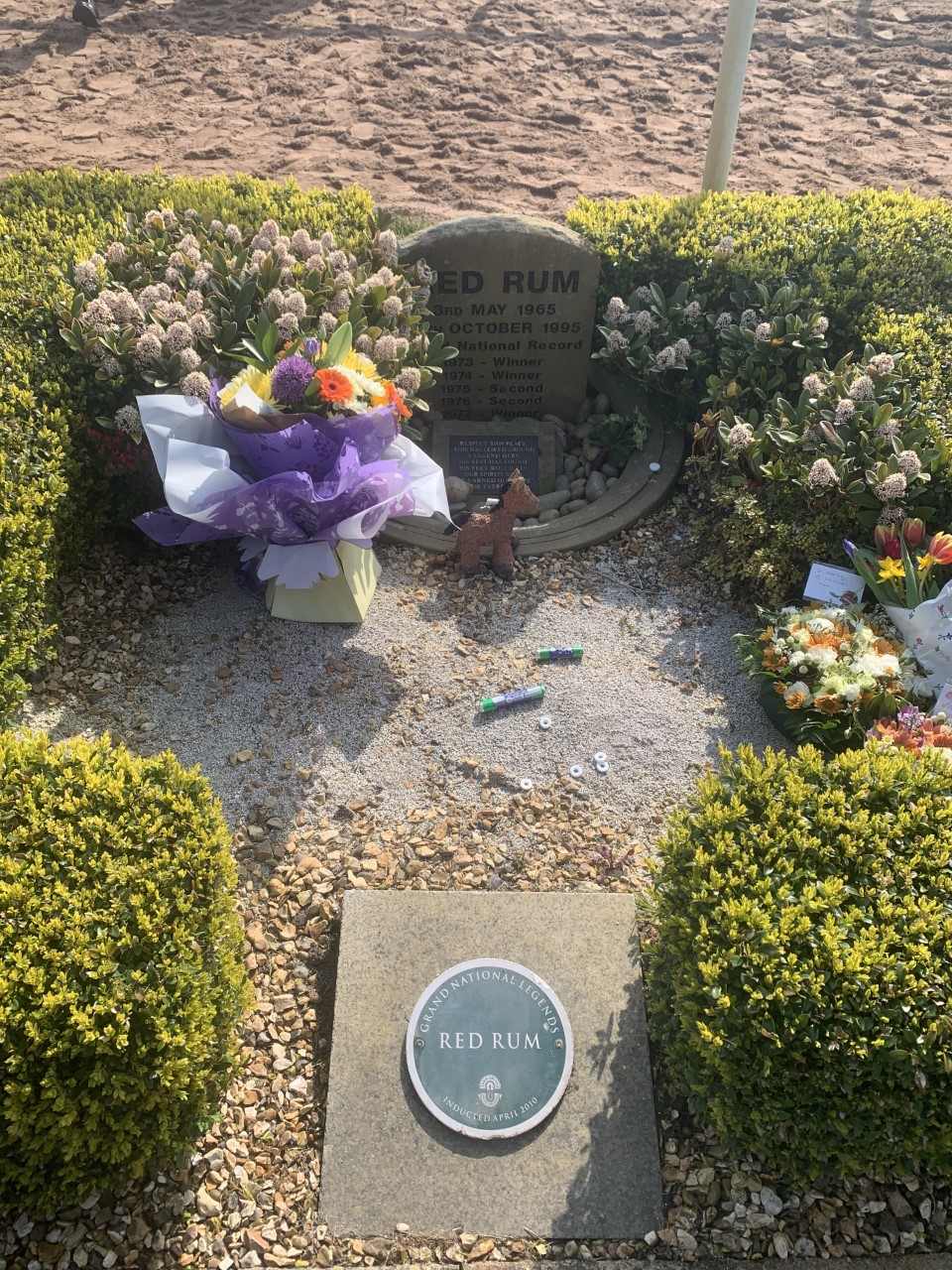
On October 18th 1995, at the age of 30, Red Rum sadly passed away. He was buried at the winning post of Aintree Racecourse. The epitaph reads ‘Respect this place, this hollowed ground, a legend here, his rest has found, his feet would fly, our spirits soar, he earned our love for evermore.’ I was lucky enough to visit Red Rum’s final resting place and the feeling you get whilst standing there is one I cannot describe, he was a very special horse, one I could only have wished I was around to see.

In the early 1970’s, the future of the Grand National was uncertain, however Red Rum’s record breaking few years ensured huge public support for the fund to buy Aintree Racecourse and put it in the hands of the Jockey Club.

20 time Champion Jockey AP McCoy later said of Red Rum:

Red Rum’s feats, of three Nationals and two seconds, are legendary. They will never be equalled, let alone surpassed. They say records are there to be broken, but Red Rumโ€™s at Aintree is one which will stand the test of time.”

Later, a life sized statue of Red Rum was put up at Aintree Racecourse as well as a smaller bronze statue inside Wayfarers Arcade in Southport.

https://www.telegraph.co.uk/sport/horseracing/8775130/Tony-McCoy-jump-jockeys-owe-Ginger-McCain-a-huge-debt-for-saving-the-Grand-National.html

On September 19th 2011, Red Rum’s trainer Donald ‘Ginger’ McCain passed away aged 80.

Red Rum had 100 runs, 24 wins, 15 seconds and 23 thirds, earning him ยฃ146,409.80.


Overall, I don’t think I even need to say anything. Red Rum is a legend within horse racing, but also to people who don’t even support the sport. In 2006, 11 years after his death, a survey found that Red Rum was the not only the best known racehorse, but also the best known equine animal, with 45% of Britons naming him and 33% naming Black Beauty. This to me is enough proof that Red Rum is a people’s horse. Personally, I was not even alive when Red Rum was, but I know who he is, I have watched his races and I have loved him just as much as those who did witness his greatness first hand. If new generations know him and love him, this furthers the proof that he is a people’s horse.

With Tiger Roll being pulled out of the 2021 Grand National, it may be many years until a horse wins 3 Grand Nationals to equal Red Rum’s record and even longer for a horse to come along and beat it – If it ever is beat.

I loved this post, there is not much information on Red Rum’s smaller victories, most of the articles and pages I have read focus on his Grand Nationals, English and Scottish, but not much else. I hope you all enjoyed this one and I will hopefully see you in my next post!

Best Mate: What Makes a People’s Horse?

Good Evening!

Welcome to another post here on zoelouisesmithx.com. Today’s post is a new post in my What Makes a People’s Horse series all about Best Mate, thank you to @WattyRacing for this suggestion. Let’s just get right into it!

Best Mate was foaled on 28th January 1995 by Un Desperado out of Katday. He was bred by breeder Jacques Van’t Hart and owned by Jim Lewis who sent him into training with Henrietta Knight.

Best Mate started his career on 14th November 1999 at Cheltenham in a National Hunt Flat Race (Bumper). He had Jim Culloty on board and a starting price of 10/1, shocking a lot of people, he won by 3/4 lengths to Hard To Start (14/1). A couple of weeks later, he then headed to Sandown on 3rd December 1999 for a Novices’ Hurdle where he started as the 5/4 favourite, again under Jim Culloty, he easily won by 10 lengths to Rosco (100/30).

We then move into the new millennium and on the 8th January 2000, Best Mate headed back to Sandown for the Grade 1 Tolworth Hurdle. Here he started at 4/1 under Jim Culloty, here he finished second by 2 and 1/2 lengths to the 11/8 favourite Monsignor.

Best Mate took a 66 day break before heading back to Cheltenham, this time for the Festival and the Grade 1 Supreme Novices’ Hurdle on the 14th March 2000. Under Jim Culloty again, he started the race at 6/1, where he finished second by 3/4 of a length to Sausalito Bay (14/1), however beating the 5/4 favourite Youlneverwalkalone by 1 and 1/4 lengths. Next up for Best Mate was Aintree on the 7th of April 2000 for a Grade 2 Novices’ Hurdle, where as the 4/11 odds on favourite, under Jim Culloty, he beat Copeland (9/2) for AP McCoy and Martin Pipe by 2 and 1/2 lengths.

Best Mate then took a 193 day summer break before returning to the track at Exeter on the 17th of October 2000, this time for a Novices’ Chase. He started as the 1/2 favourite and unsurprisingly won by 2 and 1/2 lengths under Jim Culloty to Bindaree (3/1). Just under a month later, with Jim Culloty, Best Mate headed back to Cheltenham for a Novices’ Chase in the November meeting on the 12th of November. This time starting as the 8/13 odds on favourite, where he won comfortably by 18 lengths to Fathalkhair (33/1) for Richard Johnson and Brian Ellison.

Swiftly we move into 2001 and after an 83 day break, Best Mate returned to Sandown on the 3rd of February for a Grade 1 Novices’ Chase and as the 5/4 favourite, under Jim Culloty, he won by 13 lengths to Crocadee (5/1). Best Mate avoided Cheltenham and after a 63 day break he headed to Aintree on the 7th of April for the Grade 1 Aintree Hurdle, under Jim Culloty as the 3/1 favourite he finished second by 14 lengths to Barton (9/1) for jockey Tony Dobbin and trainer Tim Easterby.

Best Mate then took a 213 day summer break before returning to Exeter on the 6th of November 2001. As the odds on 8/13 favourite under Jim Culloty he won by 20 lengths to Desert Mountain I (14/1) for jockey Joe Tizzard and trainer Paul Nicholls. We then move forward a couple of weeks and on the 24th of November 2001 Best Mate headed to Ascot for the First National Gold Cup, here he started as the 8/13 favourite under Jim Culloty where he finished second by just 1/2 length to Wahiba Sands (4/1) for AP McCoy riding for Martin Pipe.

One month later, on Boxing Day 2001, Best Mate headed to Kempton for the King George Chase, this time being rode by Champion Jockey AP McCoy, where they started at 5/2, however they could only manage a second by 3/4 of a length behind Florida Pearl (8/1) for jockey Adrian Maguire and trainer Willie Mullins.

We then move into 2002 and back to the Cheltenham Festival, so after a 78 day break, Best Mate headed to Cheltenham on the 14th of March 2002 for the Cheltenham Gold Cup. Here he was back under his regular jockey Jim Culloty where they started at 7/1 and won by 1 and 3/4 lengths to Commanche Court (25/1).

After winning the Cheltenham Gold Cup, Best Mate had a 254 day summer break before returning to the track in November, this time heading to Huntingdon on the 23rd of November for the Peterborough Chase, starting as the 8/15 favourite under Jim Culloty, Best Mate won by 8 lengths to Douze Douze (7/2). Just over a month later on Boxing Day 2002, Best Mate headed to Kempton for the King George Chase, where as the 11/8 favourite, back under Champion Jockey AP McCoy, Best Mate won by 1 and 1/2 lengths to Marlborough (14/1) for jockey Timmy Murphy and trainer Nicky Henderson.

As we head into 2003, Best Mate took a 77 day break before returning to the Cheltenham Festival on the 13th of March 2003 to try and retain his Gold Cup title. With regular jockey Jim Culloty taking the ride on the 13/8 favourite, he won by 10 lengths to Truckers Tavern (33/1) meaning he was now a duel Gold Cup winner.

After impressively winning his second Gold Cup, Best Mate took a 254 day break before returning to Huntingdon for the Peterborough Chase, here he was the 8/13 favourite under Kim Culloty, however he could only manage a second place to Jair Du Cochet (100/30). To end 2003, on the 28th of December, Best Mate crossed the Irish Sea and headed to Leopardstown for the Grade 1 Ericsson Chase, here he started as the 8/11 favourite under Jim Culloty where he won impressively by 9 lengths to Le Coudray (14/1).

The 2004 Cheltenham Festival quickly came around and after an 81 day break, Best Mate headed straight into his third Gold Cup on the 18th of March, where as the 8/11 favourite, under Jim Culloty, he successfully won his 3rd consecutive Cheltenham Gold Cup.

Best Mate then took a 246 day break before returning to Exeter on the 19th of November 2004 where he won the William Hill Chase as the 4/7 favourite, this time under Timmy Murphy. Best Mate ended 2004 by heading back over to Leopardstown for the Grade 1 Lexus Chase on the 28th of December 2004, however as the 9/10 favourite, back under his regular jockey Jim Culloty, he could only manage a second place, finishing behind Beef Or Salmon by 7 lengths.

The plan was for Best Mate to head straight to the Cheltenham Festival to try and win a 4th Gold Cup however just 8 days before he was due to run, he was withdrew from the race after he burst a blood vessel on the gallops. So therefore Best Mate wouldn’t be seen again until the 1st of November 2005, when he returned to Exeter, sadly, this day turned out to be the saddest day for racing fans, jockey Paul Carberry pulled up on Best Mate during the running of the Haldon Gold Cup, however when he dismounted, Best Mate stumbled and fell to his knees, sadly he collapsed and died of a suspected heart attack.

When Best Mate died, it made national news with everybody within the sport and outside of the sport feeling absolutely heartbroken at the loss of a complete legend. Government regulations meant that his body could not be buried at Exeter like his owner wanted, instead Best Mate was cremated and on the 10th of December 2005, his ashes were buried beside the winning post at his much loved course Cheltenham.

In March 2006, a life size bronze sculpture of Best Mate was unveiled at Cheltenham Racecourse, which still stands to this day. There is also a bronze stature near to the farm in Lockinge where he trained. In March 2007, Best Mate was named one of the ‘elite 12’ on the Cheltenham Hall of Fame.


So there we have Best Mate’s career. I don’t even think we need to go into much detail about his career, because as you can see he was a complete legend. However, let’s have a look at his career form:

11221/1112/1221/111/211/12/P/

So from that, as you can see, Best Mate had 22 races, winning 14 of them and finishing 2nd in 7 of them, the 22nd, sadly being where he pulled up before his life ended. This means that in Best Mate’s career, he never once fell. Matching Arkle’s record, Best Mate won three consecutive Cheltenham Gold Cup’s and he was the first horse to win multiple Gold Cup’s since L’Escargot who won in 1970 and 1971.

So, to sum it up, Best Mate was an unreal horse who everybody fell in love with. I was alive during his time, but I was young and don’t really remember much about him, but even though, he is still a horse that I know of and have been told about many a times by my family and those online who were lucky enough to remember him. I don’t think I need to say anymore about him, he was a legend and always will be and I’m so happy that his statue remains at Cheltenham so generations like my own can respect him for what he did during his career.

I want to thank you for reading this post and I hope to see you all in my next one!

10 of The Most Beautiful Racecourses in the World

Good Evening!

Welcome to a new post here at zoelouisesmithx.com. Today’s post is a little different for me, but I was inspired this week on Twitter when I seen photos of racecourses around the world that look absolutely stunning, so I wanted to create a post where I look at some of the most beautiful racecourses I could find and any information I could also find. So in no particular order, here are, in my opinion, 10 of the most beautiful racecourses in the world.


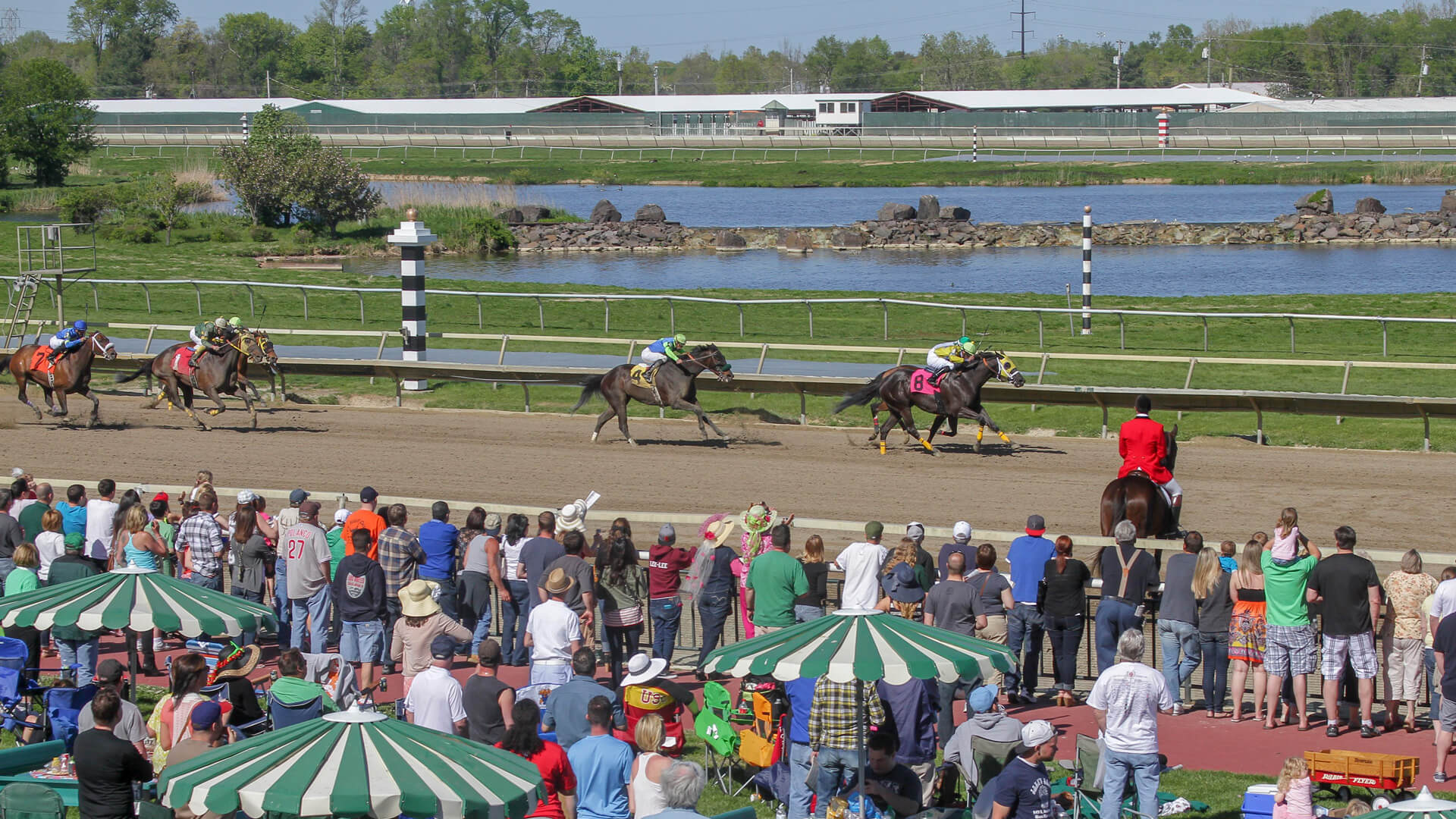
Parx Racing at Parx Casino

Based in Bensalem, Pennsylvania, USA, Parx Racing was formally known as Philadelphia Park. It opened as the Keystone Racetrack on November 4th, 1974 and was purchased by International Thoroughbred Breeders on December 28th 1984 for around $40,000,000, they then changed the name as well as the look of the track. Whilst International Thoroughbred Breeders owned the course, they began to put major improvements in place, including the construction of a turf course. In December 1990, Greenwood Racing Inc brought Philadelphia Park.

On December 18th 2006 a temporary casino opened on the first and third floor of the racetrack. 3 years later on Decemeber 18th 2009, a standalone casino opened. In 2010, the name was changed from Philadelphia Park to Parx Racing.

Website: https://www.parxracing.com/


Flemington Racecourse

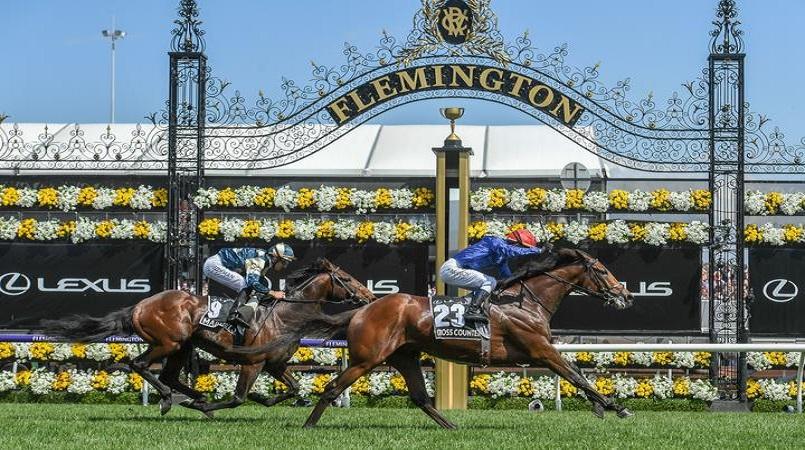
Based in Flemington, Victoria, Australia, Flemington Racecourse opened in March 1840 known as the Melbourne Racecourse, by the late 1850’s, the name Flemington was more commonly used after Flemington in Morayshire, Scotland. This was because the approach road from Melbourne crossed Moonee Ponds Creek and passed through a property owned by James Watson, he named the property after his wife Elizabeth’s hometown.

In 1840, the land was acquired from the Lang brothers and regarded as Crown Land by the government. In 1848, the Governor of New South Wales formally ordered that the site of 352 acres would be considered a public racecourse and he appointed six men as trustees of the area. In 1871, the government passed a Victoria Racing Club Act, which made the club the new trustees of the racecourse. In August 2006, Victoria Racing Club became Victoria Racing Club Limited, meaning the club is now governed by a board of directors who are elected by members of the club.

Flemington Racecourse is famously the home of the Melbourne Cup since 1861 where it was ran in front of just 4000 people, a vast difference from the 100,000 people who attended in 1880, which was a phenomenal amount at the time as the population of Melbourne at the time was only 290,000.

The Melbourne Cup is very popular with British and Irish trainers and jockeys with the likes of Ryan Moore, Joseph O’Brien, Charlie Appleby having won the race in previous years.

Website: https://www.flemington.com.au/


Chantilly Racecourse

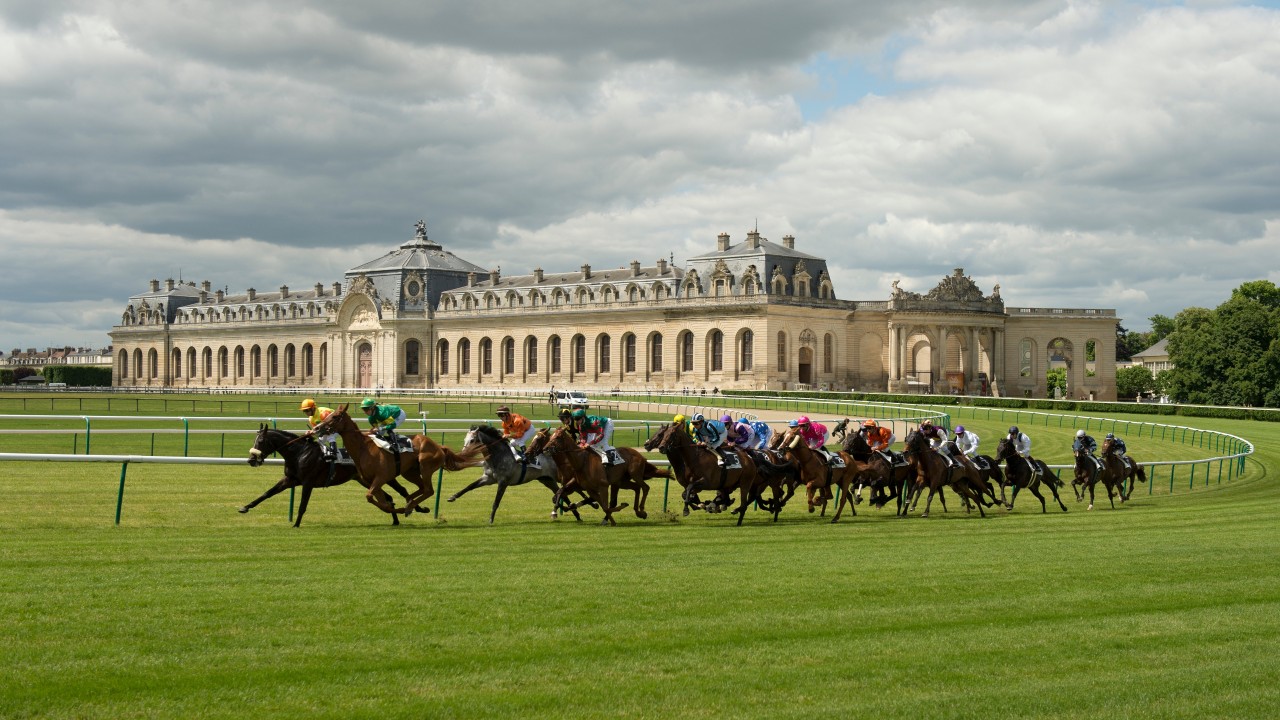
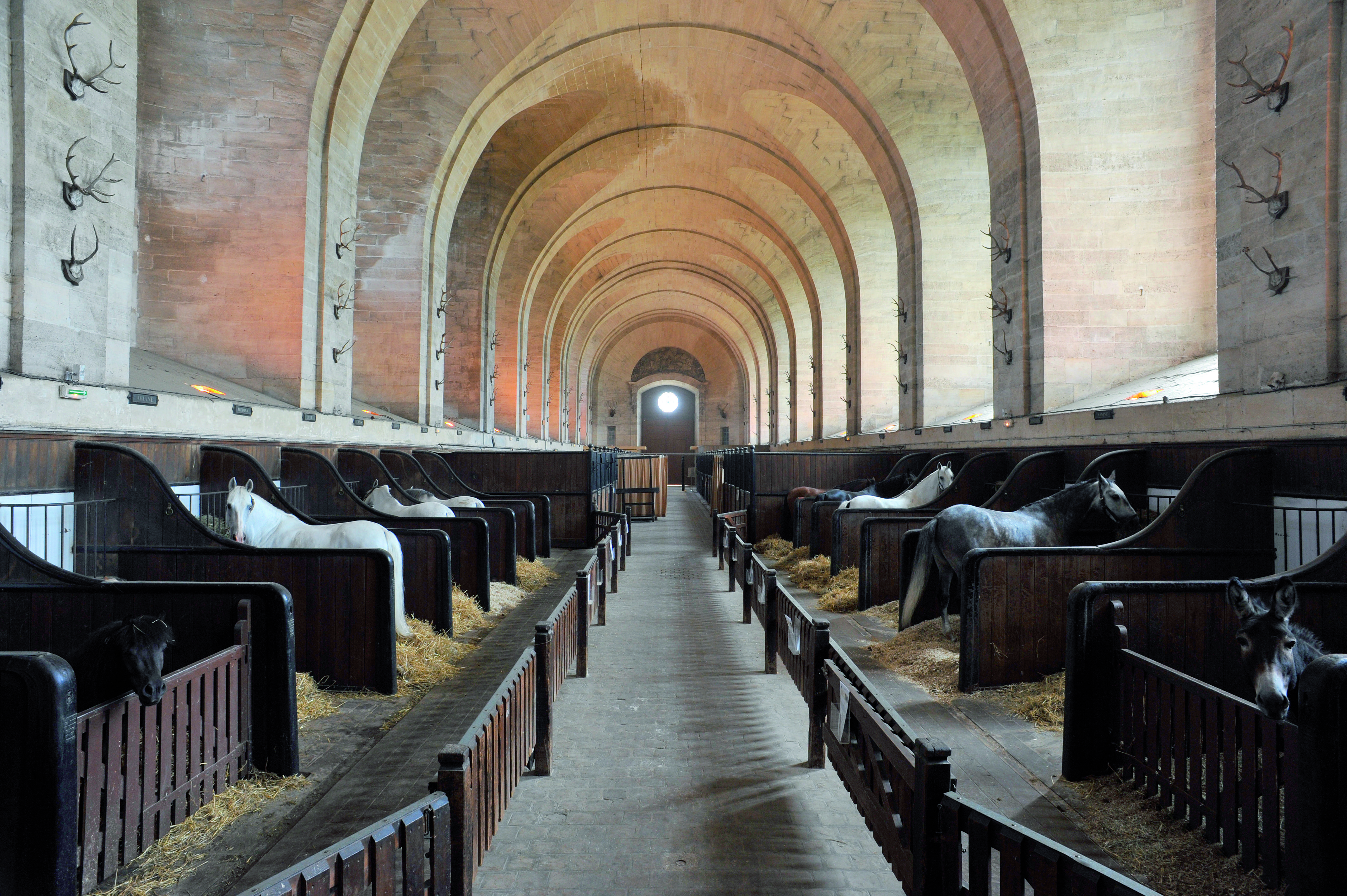
Based in Chantilly, Oise, France, Chantilly Racecourse opened on May 15th 1834. In 1879, the main grandstand, which still exists today, was built by famed architect Honorรฉ. Chantilly Racecourse was built in connection to the already existing Grandes ร‰curies (Great Stables) which were built by estate owner Louis Henri, Duc e Bourbon, Prince of Condรฉ in 1719. Designed by the architext Jean Aubert, the stables are 186 meters long and considered the most beautiful in the world.

L: http://domainedechantilly.com/en/private-events/our-spaces/great-stables/ – R: https://www.pinterest.co.uk/pin/550354016956816539/

In 1886, the Duc d’Aumale donated the racecourse to the Institut de France. In 1982, the Living Museum of the Horse was created as part of the stables. In July 2006, the museum was acquired by the Foundation for the Safe-keeping and Development of the Chantilly Domain, presided over by the Aga Khan IV.

Chantilly Racecourse is managed by France Galop and is the home to the Prix du Jockey Club since 1843, Prix de Diane Longines since 1843 and the Prix Jean Prat since 1858. In 2016 and 2017, Chantilly hosted the Qata Prix de l’Arc de Triomphe weekend whilst Longchamp was being reconstructed.

Website: https://www.france-galop.com/en/node/60


Meydan Racecourse

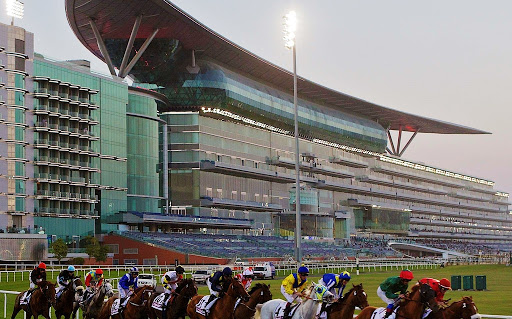
Based in Dubai, United Arab Emirates, Meydan Racecourse opened on March 27th 2010, replacing Nad Al Sheba Racecourse which formally occupied the same site. The Grandstand is over 1 mile in length and can accommodate over 60,000 spectators. The racecourse also includes The Meydan which is the worlds first five-star trackside hotel, with 285 rooms, restaurants, a racing museum, a gallery, nine-hole golf course and 72 corporate suits.

The racecourse has hosted concerts by Lady Gaga, Elton John, Kylie Minogue, Janet Jackson, Sia, Toni Braxton, Seal, Jennifer Lopez and more. The interior of the track was also used as a filming location for Star Trek Beyond.

But more importantly, Meydan Racecourse is the home the Dubai World Cup which has seen the likes of Silvestre de Sousa and William Buick, amongst others win the race.

Website: http://www.dubairacingclub.com/visit/meydan-grandstand/about-meydan-grandstand


White Turf Racing Association, St Moritz

Saint Moritz is an upmarket ski resort primarily known for its world-class winter sports. However on 3 days a year, in February, they hold the White Turf event where horses and jockeys compete on a frozen lake with the Engadine Mountains hovering over them.

Each year, this event attracts more than 35,000 spectators. Not only for the gallop and trotting races but also the fan favourite skijรถring, where skiers are pulled behind unsaddled horses around a 2,700 meter icy track

Website: https://www.whiteturf.ch/en/


Santa Anita Park

Based in Arcadia, California, USA, Santa Anita Racecourse opened on December 25th 1934. In 1907, Elias J. Baldwin opened the original Santa Anita Park Racetrack slightly east of the current location of Arcadia Park. In 1933, the legalisation of pari-mutuel gambling (of which I understand is essentially tote/placed betting) inspired San Francisco dentist Dr. Charles H Strub and movie mogul Hal Roach to create what we now know as Santa Anita Park in it’s current location at the foot of San Gabriel Mountains.

As of 2019, Santa Anita Park has held the Breeders Cup a record breaking 10 times.

Website: https://www.santaanita.com/horse-racing/live-racing/


Ascot Racecourse

Based in Ascot, Berkshire, England, Ascot Racecourse opened on August 11th 1711 by Queen Anne and is located approximately 6 miles from Windsor Castle. Ascot holds 13 of Britain’s 36 annual Flat Group 1 races and 3 Grade 1 Jumps races. Approximately 600,000 people visit Ascot Racecourse per year.

In 2004, Ascot Racecourse was closed to a ยฃ220 million redevelopment. This is the single biggest investment in British Racing. It was then reopened on June 20th 2006 by Queen Elizabeth II.

Ascot Racecourse is famously the home of Royal Ascot, which includes races such as the Queen Anne Stakes, Gold Cup, King Edward VII Stakes and many more.

Website: https://www.ascot.co.uk/


Happy Valley Racecourse

Based in Wan Chai District, Hong Kong, Happy Valley Racecourse opened in 1845 to provide horse racing for British people in Hong Kong. This area was previously swampland but the only flat ground that the Hong Kong Government deemed suitable, so they prohibited rice growing in the surrounding area. The first race was ran in December 1846.

Sadly, one of the things Happy Valley is known for is when on February 26th 1918 a temporary grandstand collapsed causing a fire which killed at least 590 people in attendance.

Happy Valley Racecourse currently has seven storey stands and holds around 55,000 people, the inner field is used for football, hockey and rugby.

Website: https://www.happyvalleyracecourse.com/


Laytown Racecourse

Based on the beach at Laytown, County Meath, Ireland, Laytown Racecourse is the only racing event run on a beach under the Rules of Racing, the first race started in 1868. Racing takes place once a year, in September.

Many top Irish jockeys have ridden winners at Laytown Racecourse, including Ruby Walsh, Colin Keane, Pat Smullen, Joseph O’Brien and Declan McDonogh. Amateur jockeys including Nina Carberry, Patrick Mullins, Jamie Codd, Katie Walsh and Derek O’Connor have also had winners at Laytown Racecourse.

Website: http://laytownstrandraces.ie/wp2/


Cheltenham Racecourse

Last, but not least, it is of course, Cheltenham Racecourse. As a jumps fan based in England, is there anywhere better to go? Cheltenham Racecourse is ased in Cheltenham, Gloucestershire, England. In 1815, the first organised flat race meeting took place on Nottingham Hill, the first races on Cleeve Hill took place in 1818. Over the next decade, the popularity of horse racing soared, with crowds of 30,000 visiting the racecourse for its annual two day July meeting which featured the Gold Cup, a 3 mile flat race.

In 1830, the meeting was disrupted by the congregation of Cheltenham’s Parish Priest Reverend Fancis Close who had spent the previous 12 months preaching the evils of horse racing. In 1831, the grandstand was burnt to the ground. To overcome the violence, the racecourse moved to it’s current venue of Prestbury Park.

Cheltenham Racecourse is most famously known as the home of the Cheltenham Festival. Four days of racing which takes place in March each year and includes some of the biggest races in British racing including multiple Grade 1 races such as the Arkle Challenge Trophy, Champion Hurdle, Queen Mother Champion Chase, Stayers’ Hurdle, Ryanair Chase, Triumph Hurdle, Cheltenham Gold Cup and many many more.

In 2015, Cheltenham Racecourse opened the ยฃ45 million Princess Royal Stand with a capacity of 6,500. This completed the redevelopment of the racecourse.

Website: https://www.thejockeyclub.co.uk/cheltenham/


So there we have it, in my opinion, 10 of the most beautiful racecourses in the world. Whilst doing my research, I can see there are literally so many incredible tracks and I found it very hard to choose just 10, so many I can do another in the future of different courses. If you have any you think I have missed do send them to me on Twitter so I can add them to a list to potentially cover in the future.

This was a very different post for me, but I thoroughly enjoyed researching these and I hope you all enjoyed it too! I shall see you all in my next post!